
Mirage

Software for exploring 3D places and captured performances in a browser or headset. An earlier browser version was licensed for SuperMuseum: America; WebGPU and Apple Vision Pro versions are in development.

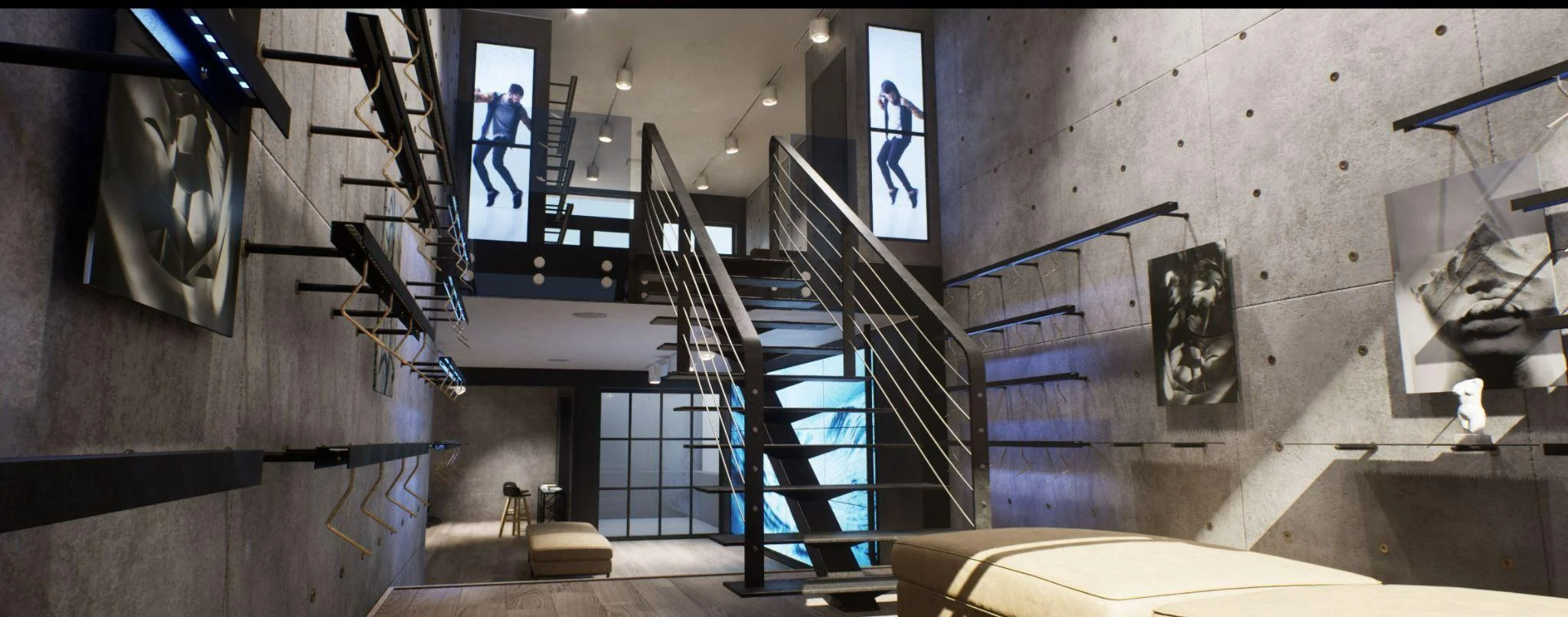
Rendered Mirage prototype interior with stairs, artwork and display panels. 7 images
Mirage environment prototype render, documented in the 2025 development deck. By Apr 2025

Move through a scene
with a captured performance.

A visitor can navigate a 3D environment, look around and encounter a recorded human performance inside it. Mirage connects that content to the viewer’s controls and the renderer that generates their view.

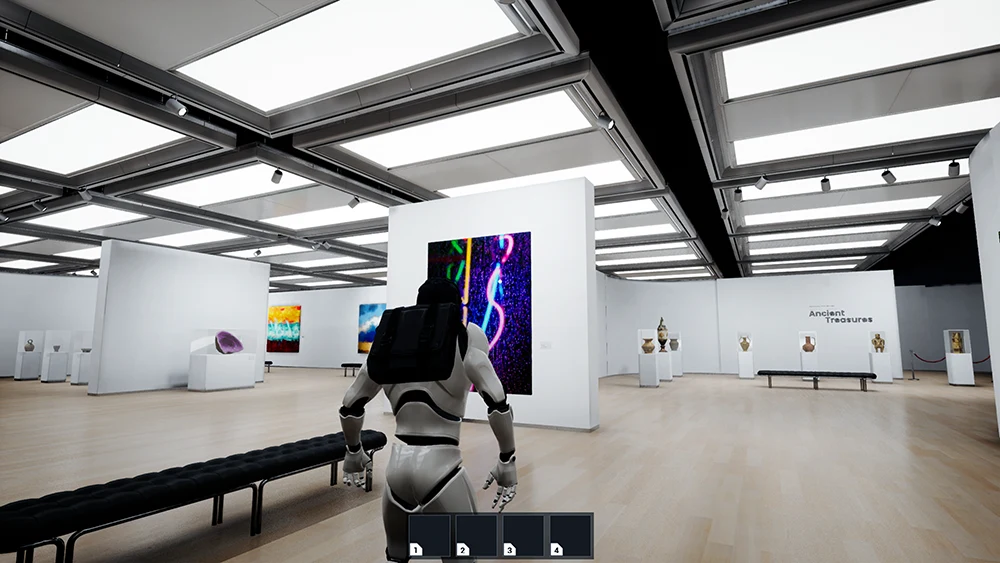
Alternate view of a gallery environment in the spatial-media prototype. 7 images
Mirage browser prototype, shown in the development deck. By Apr 2025

Interactive delivery from a cloud GPU.

The earlier browser version renders a scene on a cloud GPU and streams the view to the visitor. Their input returns to the engine. The prototype supported multiplayer interaction.

Browser prototype, 2023 · Licensed deployment, 2024Watch the browser prototype
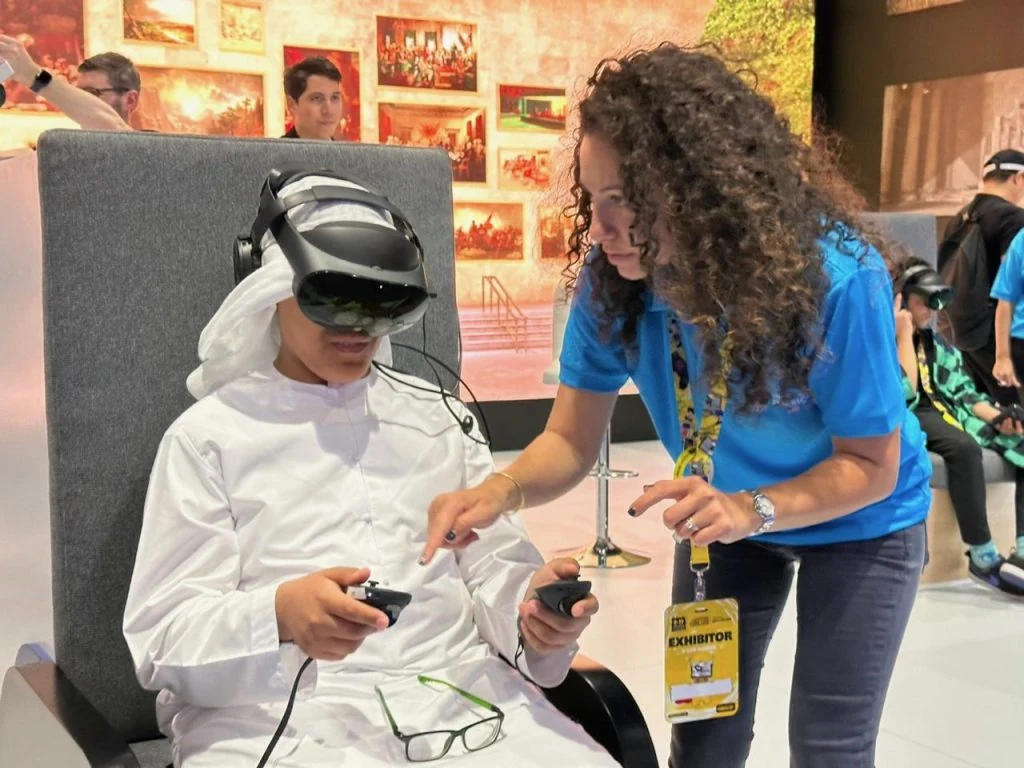
A visitor explores SuperMuseum: America in VR, with assistance from the exhibition team. Image source: Company E. 15 images
SuperMuseum: America · Mirage deployment with Company E. Feb 2024 · event

SuperMuseum: America.

Mirage was licensed for the U.S. Department of State’s SuperMuseum: America. Developed with Company E, the experience combined interactive environments and captured performances and was presented at Middle East Film and Comic Con in Abu Dhabi in February 2024.

The deployment, photographs & public coverage

WebGPU and Vision Pro.

We are developing two playback routes for spatial content. The WebGPU route brings rendering onto the viewer’s GPU in a compatible browser. The Vision Pro route uses a dedicated native player.

Browser

WebGPU rendering on NVIDIA GPUs.

Our browser development uses WebGPU to access GPU rendering directly. The focus is interactive spatial playback on NVIDIA-equipped systems, with work on scene representation, memory use and rendering performance.

In development · Distinct from the earlier cloud-streamed deployment
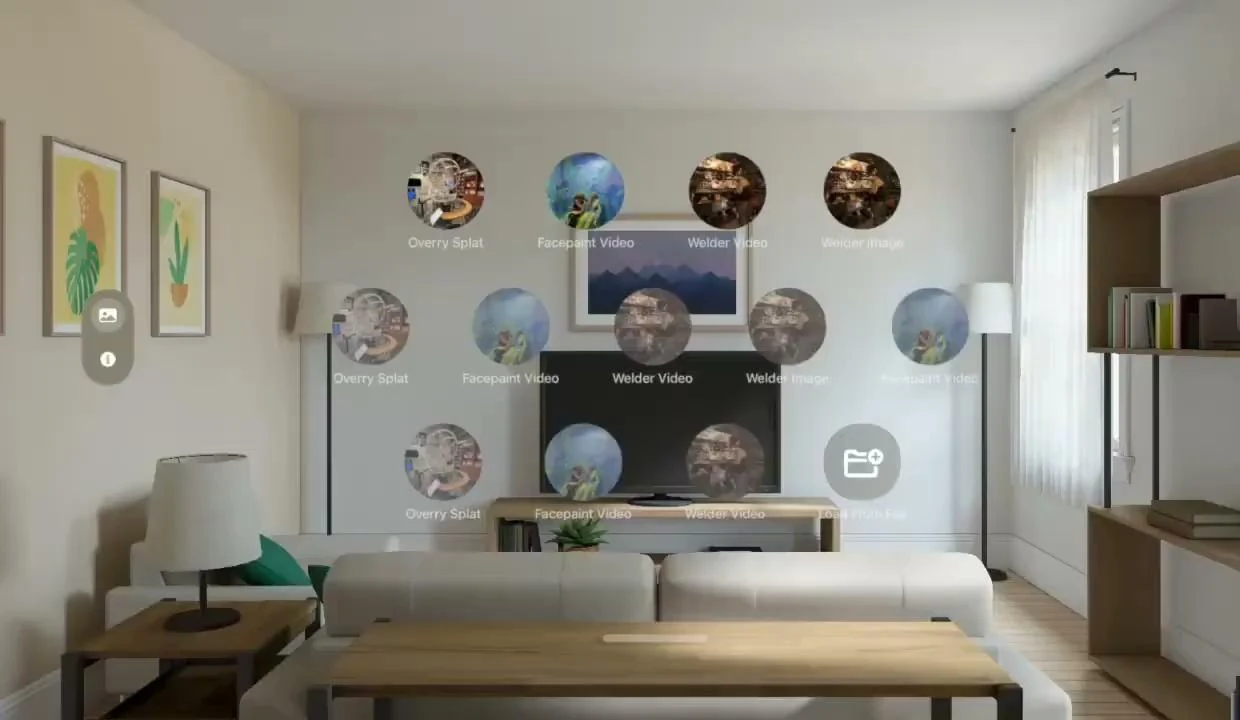
Mirage spatial-player interface shown in the supplied presentation. 7 images
Apple Vision Pro spatial-player prototype interface. By Apr 2025
Headset

A native spatial player.

Vision Pro development builds on our experiments with stereo video, layered-depth imagery and Gaussian-splat rendering. We are working on how spatial media is decoded, reconstructed and presented inside the headset.

Prototype demonstrated · Further development underway

The image and its depth
have to agree.

A depth map, the camera that produced the image and the playback renderer must describe the same space. Our research examines projection, depth alignment, colour and camera transforms across that path.

One view. Linked spatial information.Data schematic
01RGB

Image & frame identity

02Depth

Distance at each pixel

03Camera

Calibration & pose

intrinsics
rotation
translation
Each image must agree with its depth map and camera coordinates. Schematic of the data relationship, not model output.

Talk to us about the technology.

Request a Mirage demonstration or talk about browser and Vision Pro development.

Request a demonstration